It's visible
Ten sticks on the screen. Your kid always knows where they stand, without asking you and without you reminding them.
Every points app makes your kid start from zero and earn the stars. Ours starts with the card full. Turns out that matters a lot more than it looks.
Free. iPhone, iPad and Android. For the whole family.
The twist
Starting from zero says "prove you deserve something". With a full card, behaving well looks like something: it sits there all afternoon quietly saying you're doing fine. And we protect what we already have far more than what we might get. Kids included.
The others
0/10
Earn your stars.
Puntets
10/10
Right now you're doing well.
Ten sticks on the screen. Your kid always knows where they stand, without asking you and without you reminding them.
A lost point isn't the end of the day. It gets given back, with its reason too, and it never drops below zero.
Every change carries a why. Your kid doesn't learn "I was bad": they learn exactly what.
Dad, mum, grandma and whoever else sees the same scoreboard in the same second.
Mila −1 · Hitting Pau undone
You got it wrong. One tap and it's back — crossed out in the history, not erased.
1 Oct whole card again
Every month the card is full again. Nothing that happened is permanent.
The app takes the point. You only say why. You stop being the judge and start narrating what happened: "you've got one less, because of this". The consequence stops being a standoff between the two of you, and the anger drops out of the equation.
Two seconds to write the reason. Exactly the two you needed to not shout.
Try it: take a point, give it back.
"You always take mine!" gets answered by opening a screen, not raising your voice. And the history shows patterns the fridge never did: nearly all of it at the same time, for the same thing, with the same person. That's where the system starts changing the grown-up, not just the kid.
Nobody gifts themselves points on the sly. It's the easiest joke in the app and it's structural at the same time: a system a kid can tamper with stops being credible the exact day they find out they can.
Sticks, stars, hearts or light bulbs. The look of the app, their avatar. Sounds like decoration, and it isn't: a kid looks after a card they chose themselves.
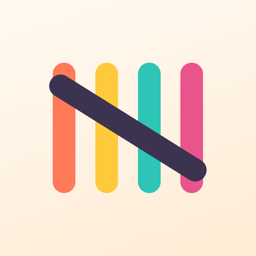
Sunny Sorbet
Sticks
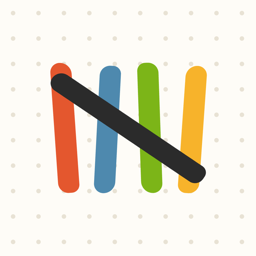
Crayon Paper
Real tally marks
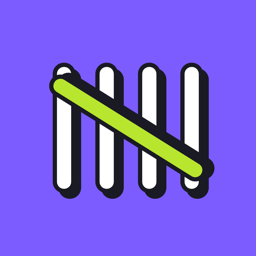
Sticker Pop
★★★★★★★★★★
Stars
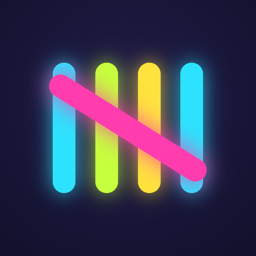
Neon Arcade
Light bulbs
Seven app styles, six kinds of points. Any combination goes.
There's a study behind it
Donaldson, DeLeon and colleagues (2014) compared both versions of the same system with first-graders: earning tokens, or starting with ten and losing them. Both worked. With the losing version, results were more consistent, the kids ended up with more tokens and, when they could pick, they picked that one. Their explanation: "I don't like losing tokens".
It only works if points come back, you never drop below zero, they go one at a time, and nobody shouts. Puntets is built on exactly those four conditions.
We don't promise results or timelines. The evidence in this field is uneven, and a broken promise costs more than the sale it wins.
The limits up front, before you ask.
Start with the card full. Every point taken carries its reason, can be given back, and is seen by every grown-up at home.
Coming soon to the App Store and Google Play.